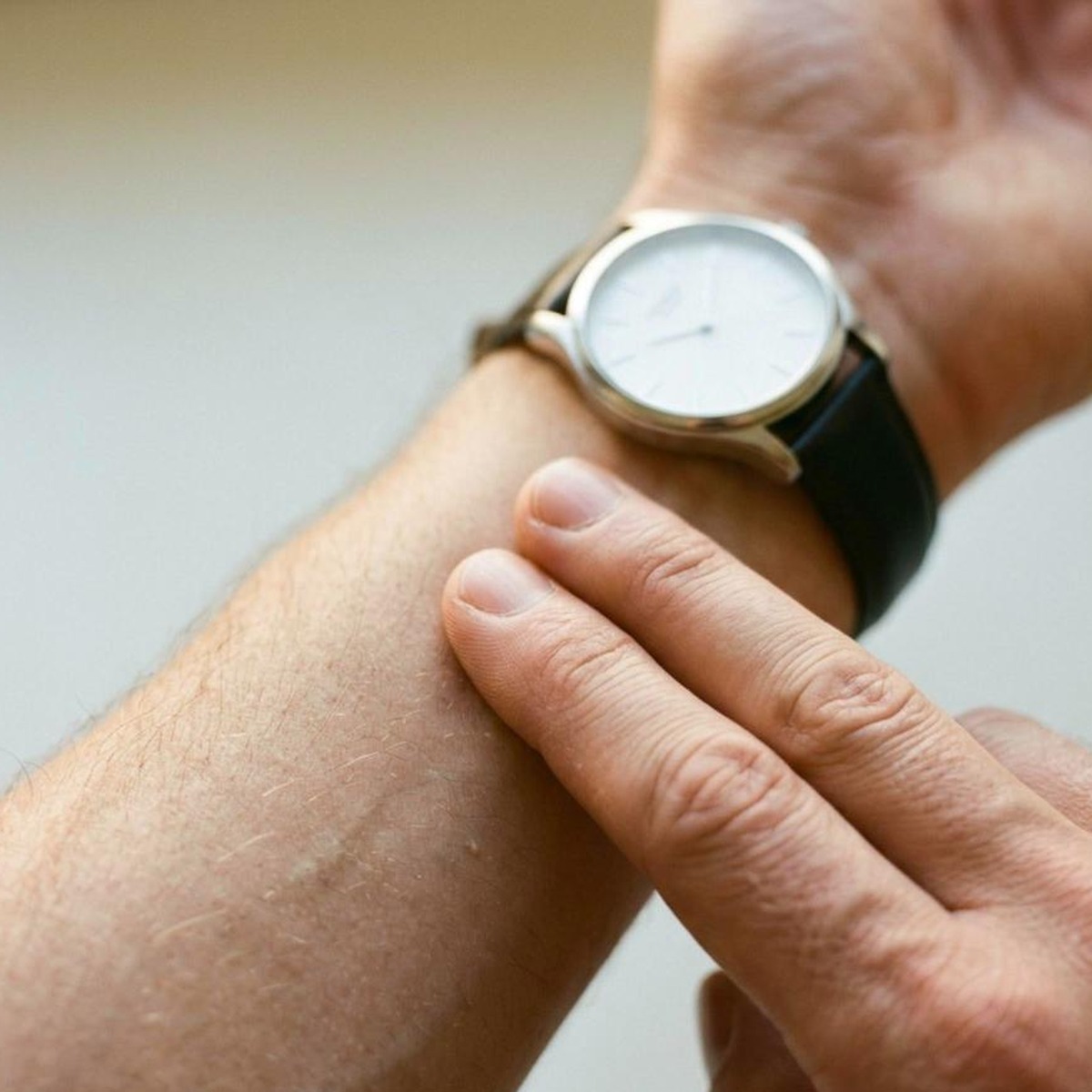
🫀 Put two fingers on your wrist and count for a full minute. If the beat skips, races, or has no rhythm you could tap along to — that is worth writing down, not ignoring.
Why an irregular pulse matters more than how it feels.
In atrial fibrillation the top chambers of the heart quiver instead of contracting properly. Blood pools, and pooled blood can form a clot. If that clot travels to the brain, it causes a stroke. Many people with atrial fibrillation feel nothing at all — for some, the stroke is the first sign. That is why the rhythm matters even when you feel perfectly well.
How to check at home, properly.
Sit quietly for five minutes first. Place your index and middle fingers — not the thumb — on the wrist, just below the base of the thumb. Count for the full 60 seconds rather than 15 seconds times four; multiplying hides exactly the irregularity you are looking for. Note the rate, and note whether the gaps between beats are even. If a home blood pressure machine flags 'irregular heartbeat', treat that as a reason to get an ECG, not as a diagnosis.
What makes it more likely.
Age over 60, high blood pressure, diabetes, an overactive thyroid, obstructive sleep apnoea with heavy snoring, heavy or binge alcohol use, a leaking or narrowed valve, and a heart that is already weak. Several of those are modifiable — which is the useful part of the list.
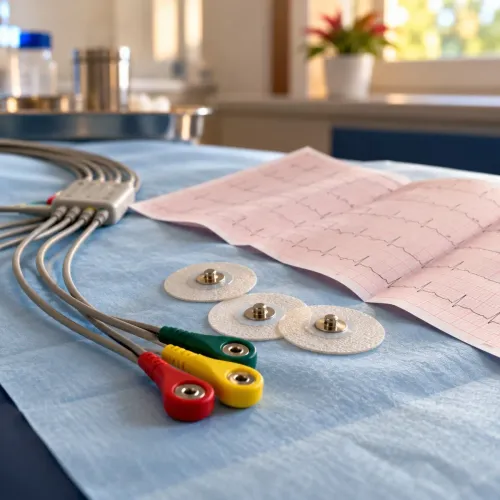
The ECG is the test that names the rhythm.
A 12-lead ECG takes about two minutes and either shows the irregular rhythm or it does not. If episodes come and go, what kind of longer or repeat recording is appropriate is a decision made at consultation, with your history and examination in front of the cardiologist — not a test to book in advance and interpret afterwards.
Treatment answers two separate questions.
First: does the rhythm itself need controlling — with rate-slowing medicines, rhythm medicines, or in selected patients an ablation. Second, and more important: does this person need an anticoagulant to prevent stroke? That second question is settled with a formal risk score, kidney function and bleeding history. Aspirin is not an adequate substitute for proper anticoagulation in atrial fibrillation.
Sudden weakness down one side, a drooping face, or slurred speech is a stroke until proven otherwise. Call for emergency help immediately — do not wait for it to pass.
For an irregular or racing pulse that needs documenting, see Dr. Stalin Roy J at SR Heart Clinic.
🩺 ECG — ₹300
📍 Velachery Main Road, Tambaram · Mon–Fri, 6:30–7:30 PM
📞 +91 70 6067 6067 · WhatsApp +91 70 6067 6067
🔗 https://www.srheartclinic.com/ecg/11
This is general awareness, not personal medical advice.
#AtrialFibrillation #IrregularHeartbeat #StrokePrevention #ECG #HeartHealth #Tambaram #SRHeartClinic
Keywords