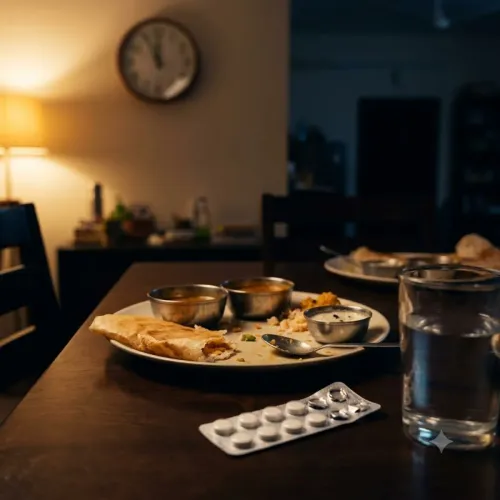
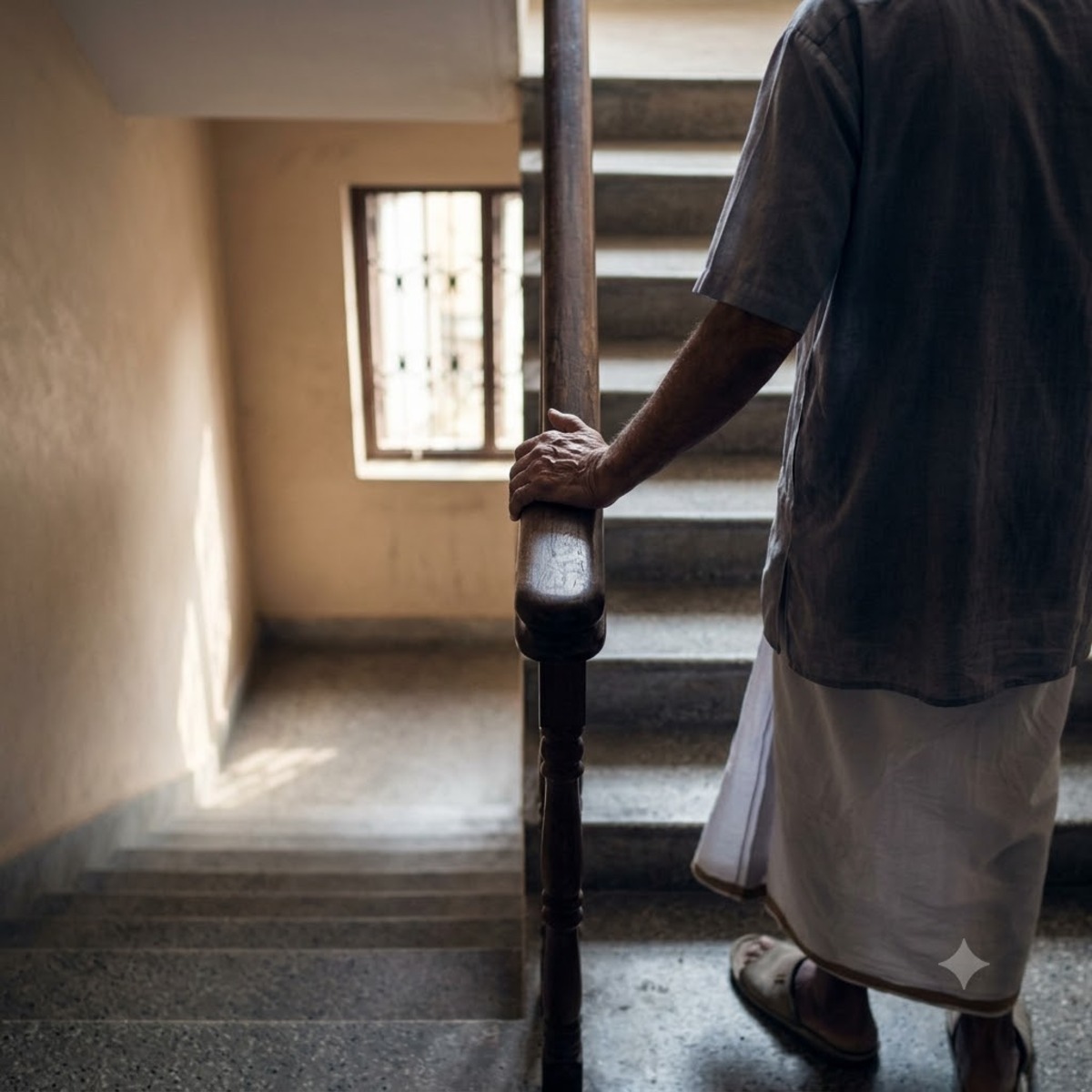
'Appa has slowed down a lot this year. He stops halfway up the stairs now. But he is 75 — what else do you expect?' 🫱
This is the most common reason a narrowed aortic valve goes unrecognised for years. Ageing and aortic stenosis produce almost the same picture — and only one of them is treatable.
What aortic stenosis is
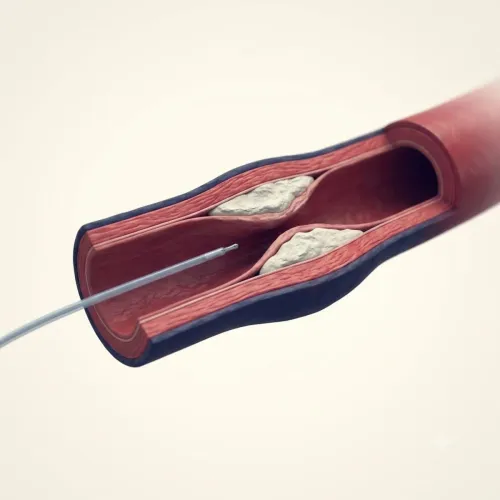
The aortic valve is the door between the heart's main pumping chamber and the rest of the body. Over decades it can stiffen and calcify until the door no longer opens fully. The heart then has to push every beat through a narrowed opening, and eventually the muscle tires.
It is common in older adults, and it develops so gradually that most people simply adjust their lives around it — fewer stairs, slower walks, one temple visit instead of two.
The three symptoms that matter most
- 🔹 Breathlessness on exertion that has clearly worsened over months
- 🔹 Chest tightness or heaviness on walking or climbing
- 🔹 Dizziness, light-headedness or a blackout — especially while walking, straining or standing up
That third one is often brushed off as low blood pressure or weakness. Once any of these three appear in a severe narrowing, the condition has moved into a stage that needs a cardiologist's assessment promptly, not at the next convenient time.
Other signals worth taking seriously: a murmur noted by any doctor during a routine examination, swelling of both feet, or being unable to lie flat comfortably at night.
How it is confirmed
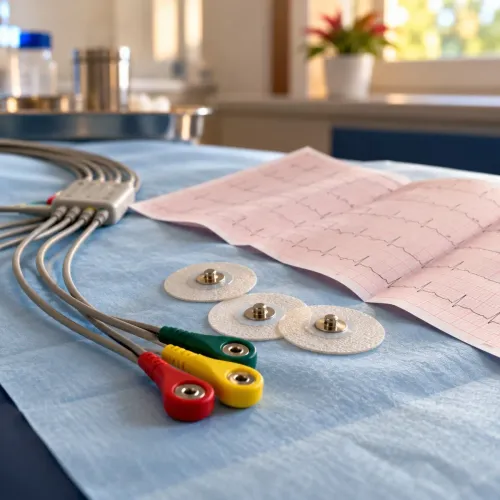
An echocardiogram is the key test — painless, about twenty minutes, no injection, no radiation. It shows how tight the valve is, how the heart muscle has responded, and whether the other valves are involved. If the echo shows severe narrowing, a CT scan is usually the next step to measure the valve and the access arteries before any treatment is planned.
No tablet reverses a narrowed valve. Medicines can ease symptoms and control blood pressure, but the valve itself needs mechanical treatment once it is severe and symptomatic.
What treatment looks like today
There are two established routes, and the choice is made by a heart team rather than by one person:
- 🔸 Surgical valve replacement — the long-established option, often preferred in younger patients and in those who need other heart surgery at the same time.
- 🔸 TAVI (transcatheter aortic valve implantation) — a new valve is carried to the heart through an artery, usually in the groin, and opened inside the old one. No chest incision, no heart-lung machine. It has become the usual route for many older adults, and for people in whom open surgery carries higher risk because of the lungs, kidneys, a previous bypass or overall frailty.
For TAVI, the stay in hospital is typically two to three days. A cost estimate can be given once the CT scan has been reviewed, because the valve size and approach are decided from it.
What families can do this month
If an elderly parent has slowed down noticeably this year, do not settle the question at home. Ask the three questions — breathlessness, chest heaviness, any dizziness or blackout — and if the answer to any is yes, an echocardiogram will settle what age alone cannot explain.
For breathlessness, dizziness or a murmur in an older adult, see Dr. Stalin Roy J at SR Heart Clinic.
🩺 TAVI assessment — cost on consultation
📍 Elangovan Street, Tambaram · Mon–Fri, 6:30–7:30 PM
📞 Call or WhatsApp 70606 76067
🔗 https://www.srheartclinic.com/page/tavi-transcatheter-aortic-valve-implantation/6aa3713445318114292562ff
Consultation and echocardiogram are done at the clinic. TAVI is performed at Kauvery Heart Institute, Radial Road.
This is general awareness, not personal medical advice.
#AorticStenosis #TAVI #HeartValve #SeniorHealth #Cardiology #SRHeartClinic #Tambaram
Keywords