


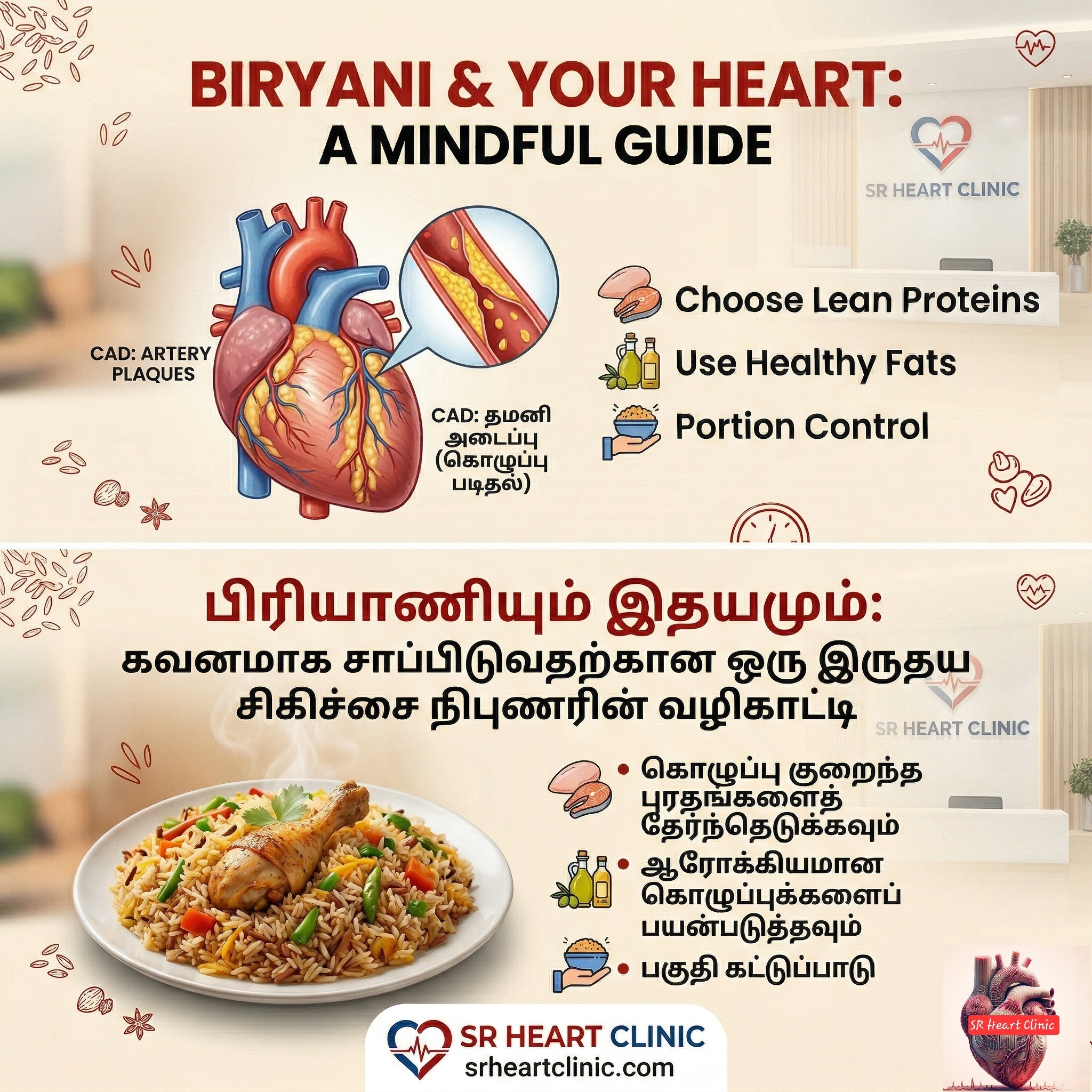
In our part of the world, biryani isn’t just a meal; it’s a celebration. Whether it’s a Sunday family gathering or a festive occasion, the aroma of spices and saffron is hard to resist. However, for those living with Coronary Artery Disease (CAD), that golden plate of biryani often comes with a side of guilt.
The question I hear most often in the clinic is: 'Doctor, do I have to give up biryani forever?'
The short answer is no, but the traditional way it’s prepared often conflicts with heart-healthy goals. Let’s look at how we can bridge the gap between tradition and clinical health.
Why Traditional Biryani Can Be a 'Heart Risk'
To manage CAD effectively, we focus on three main dietary pillars: reducing saturated fats, managing glycemic load, and controlling sodium. Traditional biryani often challenges all three:
- Saturated Fats: Heavy use of ghee (clarified butter), vanaspati, and fatty cuts of red meat (mutton) can raise LDL (bad cholesterol), contributing to plaque buildup in the arteries.
- Refined Carbohydrates: Large portions of white basmati rice have a high glycemic index, which can spike blood sugar and triglycerides.
- High Sodium: The salt content in the rice, the marinade, and the accompanying salan or raita can contribute to hypertension, putting extra strain on a recovering heart.
The 'Heart-Smart' Biryani Makeover
You don’t have to 'ban' biryani; you just need to re-engineer it. Here is how you can enjoy a heart-friendly version that aligns with evidence-based cardiac nutrition:
1. Choose Leaner Proteins
Instead of fatty cuts of mutton, opt for skinless chicken breast or, even better, fish. If you prefer a vegetarian option, use soy chunks or a variety of high-fiber vegetables like beans, carrots, and peas.
2. Swap the Fats
Replace ghee and butter with heart-healthy unsaturated oils like sunflower, rice bran, or olive oil. You can still achieve a rich flavor by slow-cooking (the Dum style) with aromatic spices rather than relying on fat for mouthfeel.
3. Fiber is Your Friend
The fiber in your meal helps slow the absorption of fats and sugars.
- The Rice: Use unpolished or brown basmati rice if possible. If you prefer white rice, strictly limit the portion to one small bowl.
- The 'Half-Plate' Rule: Fill half your plate with a fresh cucumber and onion salad (with minimal salt) before you even touch the biryani.
4. The Spice Advantage
Spices like turmeric, ginger, garlic, cinnamon, and cloves are actually beneficial! They are rich in antioxidants and have anti-inflammatory properties that support vascular health. Use them generously to enhance flavor without needing extra salt.
Clinical Takeaways for CAD Patients
If you are planning to have biryani this week, keep these three practical rules in mind:
- Frequency Matters: Treat biryani as an occasional 'special' meal, not a dietary staple.
- Watch the Sides: Avoid fried appetizers (like Chicken 65) or sugary desserts (like Gulab Jamun) on the same day. Stick to a low-fat curd raita.
- Portion Control: The primary driver of post-meal heart strain is the total caloric load. Stick to a single serving and avoid the 'second helping.'
The Bottom Line: Managing CAD is about sustainable changes, not deprivation. By making mindful substitutions and controlling your portions, you can still enjoy the flavors you love while keeping your heart protected.
Do you have questions about how your favorite local dishes affect your heart health? Feel free to ask during your next consultation at SR Heart Clinic.